

Good financial planning is about more than choosing investments. An estate planning financial adviser in the Sutherland Shire can help connect your investment decisions with retirement, wealth management, Age Pension and aged care planning. For estate planning, the focus is on how your financial strategy supports the people and priorities that matter to you.
It’s understandable to want a clear picture of what an adviser does, especially when superannuation, retirement income and future care needs affect the same financial decisions. Advice can bring these moving parts together in a considered plan shaped around your circumstances and goals.
This article explains the role of a financial planner, the areas advice may cover and how planning can support you through different life stages. It also explores local financial planning in the Sutherland Shire, what to consider when choosing advice and how estate planning strategy fits alongside investing, retirement and wealth preservation.
Key Takeaways
- A financial planner can bring investment choices, superannuation and risk management into a strategy aligned with your goals and circumstances.
- Retirement modelling helps you explore how income, spending and longevity may shape your plans for life after work.
- Wealth management can connect portfolio decisions with tax-minimisation strategies and the preservation of assets for the future.
- Age Pension and aged care planning considers how your financial position and changing care needs may affect your options.
- Local advice can help coordinate these decisions, while estate planning strategy keeps your financial arrangements connected to the people and priorities that matter to you.
Investment advice
Investment advice connects your financial plan with decisions about investments, income and superannuation. An estate planning financial adviser in the Sutherland Shire can also help you consider how those decisions relate to your longer-term financial intentions.
How investment advice works
An adviser reviews your assets, debts, income needs and existing investments before developing recommendations. Your financial plan should explain how each recommendation supports your objectives and the risks involved. For example, someone saving for a future home purchase may need different access to funds from someone investing for retirement. Before acquiring a financial product, read and consider its Product Disclosure Statement and Target Market Determination.
Advice for pre-retirees, retirees, business owners and high-income earners
Advice should reflect the decisions facing you now. Wealth builders aged 35-50 may focus on super contributions, investment choices and building assets. Pre-retirees and retirees aged 55-65 may consider how savings can support retirement income. Business owners can examine how business and personal assets fit together, while high-income earners may assess tax-minimisation strategies alongside their wider financial goals.
Building an investment strategy
An adviser can review your super fund, existing holdings and expected income before recommending an investment approach. Discuss diversification, time frames, access to funds and your capacity to tolerate market movements. Ask how each recommendation relates to your objectives and what risks it involves. This gives you a considered basis for comparing investment choices rather than assessing products in isolation.
Independent financial advice in Miranda and Sydney
When comparing independent financial advice for Miranda and Sydney clients, consider the adviser’s recommendations, reasoning and service terms. Ask how the advice addresses your circumstances, how conflicts are managed and whether product costs and risks will be explained. True North Lifestyle operates in alignment with professional standards, and the Australian Securities and Investments Commission (ASIC) maintains the Financial Advisers Register, where you can check whether a provider is authorised and registered to give financial advice.
Advice for local residents
Local residents can seek advice from True North Lifestyle on investment portfolios, superannuation and how assets may support future income. Gather your super fund details, income information and investment list before an advice meeting. These records make the discussion specific, whether you live in Miranda, Sydney or nearby suburbs. If you’re considering an inheritance, for example, you may want to understand how investment decisions fit your broader estate planning intentions.
Fees and service arrangements
Advice fees depend on the scope of work, your circumstances and whether you need a one-off plan or ongoing reviews; the price is provided after a quote request. Before proceeding, understand what the service covers, how fees are charged and what continuing support includes. If you’re choosing an estate planning financial adviser in the Sutherland Shire through True North Lifestyle, ask how investment recommendations will be documented and reviewed as your goals or circumstances change.
Retirement planning
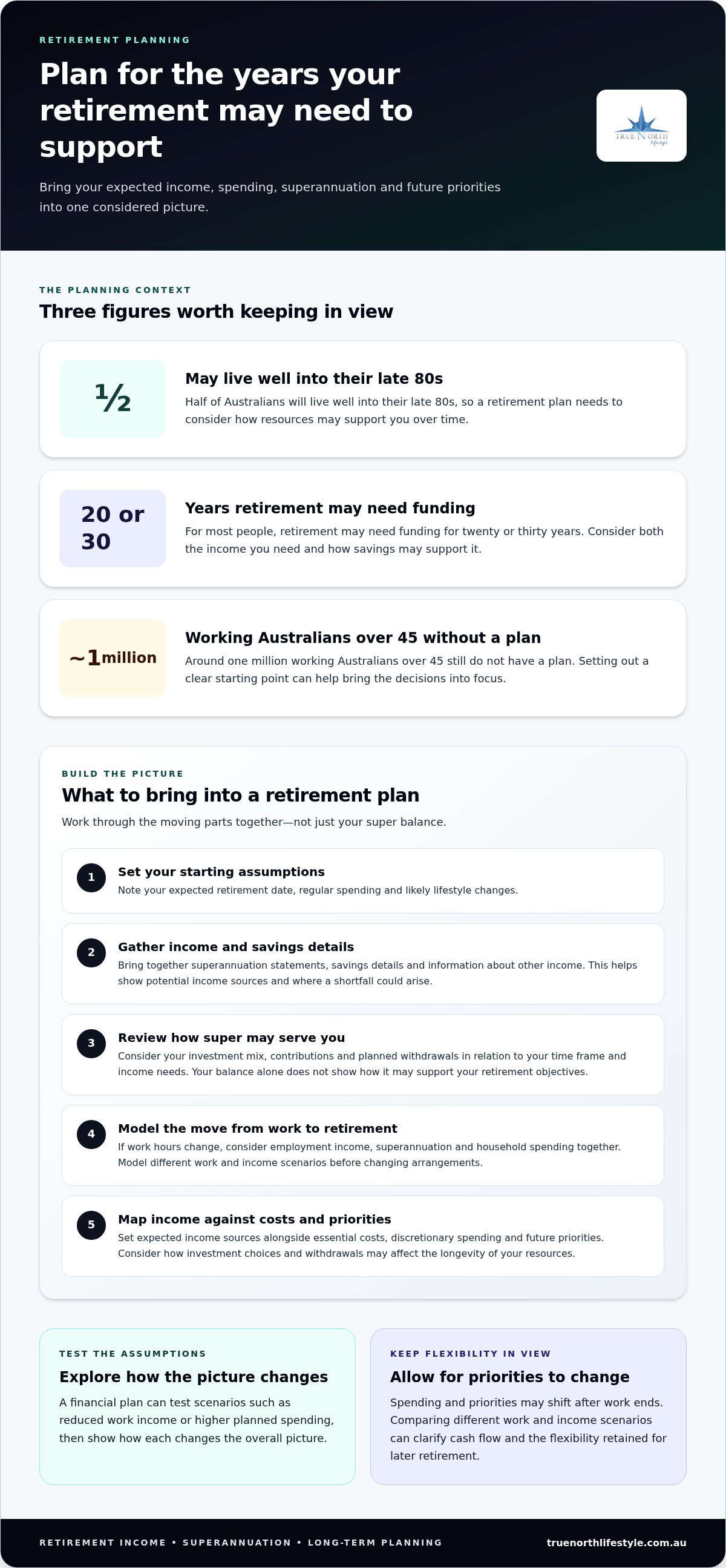
Retirement decisions shape how your superannuation and other resources support your next stage of life. Half of Australians will live well into their late 80s, and for most, retirement may need funding for twenty or thirty years. A plan should therefore consider both the income you need and how your savings may support it over time.
Start by setting out your expected retirement date, regular spending and likely changes in lifestyle. Then gather your superannuation statements, savings details and information about other income. These steps help show how much income may come from each source and where a shortfall could arise. Around one million working Australians over 45 still do not have a plan, making a clear starting point especially useful.
Superannuation is central to many retirement plans, but your balance alone doesn’t show how it may serve you. Consider how your investment mix, contributions and planned withdrawals relate to your time frame and income needs. A superannuation review can help establish whether your current arrangements align with your retirement objectives. Also allow for the possibility that spending and priorities may change after work ends.
A transition-to-retirement strategy can help organise decisions as you move from employment towards retirement. For example, someone reducing their work hours may need to coordinate employment income, superannuation and household spending. Model different work and income scenarios before changing arrangements. This can clarify how each option affects cash flow and the flexibility you retain for later retirement.
Retirement income planning brings these details together. Map expected income sources against essential costs, discretionary spending and future priorities. Then consider how investment choices and withdrawals may affect the longevity of your resources. A financial plan can test assumptions, such as reduced work income or higher planned spending, and show how each scenario changes the overall picture.
Choose an adviser who can explain the reasoning behind recommendations and relate them to your circumstances. Australian financial advisers must be licensed by ASIC, follow fiduciary duties and meet ongoing training standards. A retirement planning discussion should cover your superannuation, income needs, investment approach and the assumptions used in projections. Ask how the advice will be documented and reviewed as your circumstances or relevant laws change.
A practical next step is retirement modelling that compares your expected income with planned spending. It can turn broad retirement goals into decisions about timing, superannuation and the transition from work.
Customised wealth management solutions
A financial adviser helps shape the financial strategy around your situation, while an estate planning lawyer advises on legal documents and their preparation. In NSW, financial advice can connect wealth decisions with your circumstances, but it doesn’t replace legal advice.
Wealth Creation and Management
Wealth creation focuses on building assets; wealth management considers how those assets work together over time. List your investments, superannuation, property, debts and income, then identify the goals each resource needs to support. For example, a business owner might weigh reinvesting in the business against building personal assets. A tailored strategy can also consider diversification, risk tolerance, tax-minimisation opportunities and the need for reviews as circumstances change.
Look for advice that explains the reasoning behind portfolio recommendations, not just the products selected. Your time frame, access needs and capacity to absorb market movements all affect the approach. A portfolio designed for long-term growth may not suit someone who expects to draw on the funds soon. Risk management and portfolio sustainability modelling can help assess how investment choices fit your goals and income needs.
Wealth Transfers and Estate Planning
Estate planning strategy considers how your financial arrangements align with your intentions for transferring wealth. Start by identifying whom you want to provide for, the assets involved and any existing arrangements that may affect them. A financial adviser can help examine the financial implications and coordinate the strategy with legal advice. The lawyer’s role is distinct: they advise on and prepare legal documents.
Planning matters before a transfer is needed. Half of all inheritances are gone within a few years, so consider how a recipient might manage a large sum alongside other financial priorities. Discuss the intended timing and purpose of a transfer, then review how it fits your wealth preservation goals. Changes in family circumstances, assets or intentions are practical prompts to revisit the plan.
Insurance and Wealth Protection
Insurance can form part of a broader wealth protection strategy. Review existing cover, the risks it addresses, its cost and how it fits your household or business commitments. For example, a business owner may consider how an interruption to personal income could affect family expenses or investment plans. The aim is to understand the role of cover in your overall financial position, rather than viewing each policy in isolation.
Compare your protection needs with your assets, liabilities and the people who rely on your income. An adviser can explain how risk management relates to portfolio sustainability and longer-term plans. Review whether your arrangements remain relevant as your situation changes. A new business commitment, a change in household income or a planned wealth transfer can prompt a fresh assessment.
Age Pension and aged care planning
Age Pension and aged care decisions connect household income, savings and future support needs. List your income sources, superannuation, savings, investments, property and regular expenses. This gives you a working picture of the resources available for retirement and care. For example, someone considering residential aged care can compare current spending with the financial commitments they expect to manage.
Planning for the Age Pension involves organising your financial information and understanding how your broader position relates to support options. Keep records of income, assets, superannuation and changes in household circumstances together. Then consider how a decision, such as changing an investment or drawing from an account, affects your overall cash flow. This preparation makes discussions about Centrelink structuring more informed, without treating one decision in isolation.
Aged care planning starts with the type of support you’re considering and the resources available to fund it. Note your care preferences, likely household expenses and the accounts that could contribute to those costs. A family comparing support at home with residential care needs to consider how each option affects ongoing spending and other financial goals. A clear summary can help relatives understand the decisions and responsibilities involved.
Review your plan when circumstances change. Retirement, a move, changes in health needs or a shift in family support can alter income and spending priorities. Update your account records and cash-flow estimates, then reconsider how investments and superannuation fit the revised plan. This helps you understand the financial trade-offs before committing to a major change, rather than relying on an outdated estimate.
Financial advice can organise these decisions by connecting retirement income planning with wealth preservation and future care costs. A structured discussion can examine your resources, spending priorities and decision timing. It can also identify questions that need specialist attention, such as the terms of an aged care arrangement. The aim is to understand the financial implications and keep choices connected to your priorities.
For a useful first meeting, prepare a concise snapshot of income sources, savings and investment accounts, superannuation details, regular expenses and care considerations. Include planned changes, such as selling an asset or reducing work. This gives the adviser a grounded starting point for modelling cash-flow scenarios and discussing how Age Pension and aged care planning fit into your wider retirement strategy.
Local financial planning services in Sutherland Shire
Local advice can bring investment, retirement and estate planning decisions into one financial strategy. A directory lists 218 advisers within 10 kilometres of Sutherland, so compare their approach, relevant experience and service arrangements.
Comparing Local Financial Advisers
Compare how each adviser connects your goals with recommendations, rather than relying on location alone. For estate planning, ask how financial advice can support wealth preservation and intended transfers, and where legal advice fits. Check the adviser’s authorisation and registration on the Financial Advisers Register maintained by the Australian Securities and Investments Commission (ASIC). Then consider how clearly they explain risks, portfolio choices and ongoing support.
Questions to Ask Advisers
Ask what the advice will cover, how recommendations will be documented and how future reviews work. For example, find out how a proposed investment strategy relates to your income, superannuation and estate planning priorities. Ask how fees are calculated, which services they cover and how conflicts are managed. Clear answers help you compare the service itself, not just the initial conversation.
Local context can make discussions more practical. A Sutherland Shire resident approaching retirement may want advice that considers superannuation, investments and expected income together. A business owner may need to explain how business assets relate to personal wealth and future plans. In either case, bring a concise summary of your goals and financial position to keep the discussion focused.
Use the first meeting to understand how an adviser works through your circumstances. Explain the decision you need to make, such as reviewing a portfolio or aligning financial arrangements with your estate planning intentions. Notice whether the adviser asks about your time frame, risk tolerance and priorities before discussing strategies. A considered process should make the reasoning behind recommendations clear.
Service arrangements matter too. Establish whether you need a defined piece of advice or an ongoing relationship, and what each arrangement includes. Ask how often your financial strategy is reviewed and what changes could prompt an earlier update. A change in income, family circumstances or investment goals may affect whether existing recommendations remain relevant.
Consider how financial advice and legal work fit together. An adviser can help with the financial implications of wealth transfer and portfolio decisions; an estate planning lawyer provides legal advice and prepares legal documents. Ask how the financial strategy will coordinate with your legal arrangements, so each professional’s role is clear.
Before deciding, compare the written scope, recommended strategy, fees and review process from each adviser. Keep your notes and identify which approach best addresses your priorities. To discuss how portfolio strategy and wealth preservation can fit your circumstances, arrange a financial planning discussion.
True North Lifestyle: Retirement modelling & long-term projections
True North Lifestyle can help bring retirement and wealth decisions into a clearer financial strategy. Its retirement modelling and long-term projections examine how income, superannuation and planned spending may work together across different scenarios. This can help if you’re approaching retirement, reviewing your super fund or reassessing your investment approach.
Advice can also include tax-minimisation strategies, superannuation review and optimisation, and bespoke portfolio construction. These elements connect immediate financial choices with longer-term priorities, including estate planning strategy. Start by outlining the decisions you’re weighing and the outcomes you want advice to address.
Contact True North Lifestyle to discuss your financial planning needs.
Make your next financial decision with clarity
Your next step can be simple: identify the decision you want to make, whom it affects and the outcome you hope to support. That gives an advice conversation a clear starting point, whether you’re reviewing future plans or considering how your financial arrangements reflect your intentions.
For someone seeking an estate planning financial adviser in the Sutherland Shire, True North Lifestyle can connect those priorities with practical financial advice. Its support includes retirement modelling and long-term projections, tax-minimisation strategies, and superannuation review and optimisation. This can help you consider how today’s choices relate to longer-term plans, with recommendations tailored to your circumstances.
You don’t need every detail settled before you begin. Bring the question that matters most and use the discussion to clarify possible next steps.
Contact True North Lifestyle to start a conversation about your financial planning needs. A considered first step can make the path ahead feel more manageable.
Frequently Asked Questions
What does a financial planner do?
A financial planner helps organise financial decisions around your goals and circumstances. They can assess your position, explain possible strategies and prepare recommendations for you to consider. For example, someone planning to reduce work hours could examine how that affects cash flow and savings. Ask the planner to explain the reasoning, risks and assumptions behind each recommendation so you can make informed decisions.
Can I access advice online or do I need to visit Sutherland?
You can begin by contacting True North Lifestyle through its online booking or contact options, and the business has offices in Miranda and Sydney. The available information describes online ways to arrange a consultation, not a confirmed online advice service. If you prefer an in-person meeting, ask about meeting at an NSW office. You don’t need to visit Sutherland specifically to start a discussion about advice.
How are your advisers qualified and regulated?
True North Lifestyle’s team includes four Certified Financial Planners. In Australia, financial advisers must be licensed by ASIC, follow fiduciary duties and meet ongoing training standards. Before engaging an adviser, identify who will prepare your recommendations and check their registration on ASIC’s Financial Advisers Register. This helps you understand the individual adviser’s authorisation, rather than relying only on a firm’s general description or credentials.
How do you charge for advice?
True North Lifestyle charges professional fees for financial plans, retirement modelling and strategic tax advice. Arrangements can include one-off strategic implementation or ongoing advice; portfolio construction and oversight involve ongoing management fees. Fees depend on the agreed scope and arrangement. Before proceeding, review the written advice scope and clarify which work and continuing support the fees cover, including whether portfolio oversight is part of your agreed service.
How often should I review my financial plan?
Review your plan when a change could affect its assumptions or recommendations. Examples include a new job, a change in income, retirement, a major asset purchase or a shift in family responsibilities. Check that your goals, accounts and cash-flow assumptions still match your situation. Ongoing advice can include plan reviews, while a major change may call for attention before the next scheduled review.
Why does it matter that your financial adviser is ASIC-licensed?
ASIC licensing matters because Australian financial advisers must be licensed and meet professional obligations, including fiduciary duties and ongoing training standards. You can use ASIC’s Financial Advisers Register to see whether a relevant provider is authorised and registered to give advice. Check the adviser who will actually work with you. Registration helps establish their authority to advise, but it doesn’t tell you whether their strategy suits your goals.
Which financial advisers in the Sutherland Shire specialise in estate planning?
For readers seeking an estate planning financial adviser in the Sutherland Shire, True North Lifestyle provides estate planning strategy as part of its financial planning services, with an office in Miranda. Advice can address the financial aspects of wealth preservation and intergenerational planning. An adviser’s role is distinct from legal document drafting. If your plans require legal documents, coordinate the financial strategy with a legal professional who can advise on them.
What estate planning services do Sutherland Shire financial advisers offer?
An estate planning financial adviser in the Sutherland Shire can connect financial strategy with wealth preservation and intended intergenerational transfers. True North Lifestyle offers estate planning strategy alongside superannuation review, tax-minimisation strategies and portfolio decisions. This helps you assess how your financial arrangements relate to your intentions for future wealth transfers. Financial advice is separate from legal advice and the preparation of legal documents.


