

What if the biggest risk to your retirement isn’t a market downturn, but leaving your super on autopilot? If you’re wondering whether your fund is set up to support the lifestyle you want, thoughtful superannuation advice Australia can turn uncertainty into a clear, considered plan.
It’s understandable to be concerned about fees reducing your balance, contribution rules affecting your options and market volatility influencing when you can retire. Super isn’t a set-and-forget account. It’s a long-term strategy that should reflect your goals, time horizon and comfort with investment risk.
This guide explains how to review your super in 2026, including the 2026 to 27 contribution caps, tax-minimisation strategies, fees and portfolio choices. It also shows how retirement modelling can test different scenarios and clarify practical next steps. For residents of Miranda and the wider Sutherland Shire, True North Lifestyle brings superannuation optimisation, bespoke portfolio construction and retirement modelling together to help guide decisions that can shape your retirement.
Key Takeaways
- Assess whether your fund structure, investment mix and retirement strategy fit your circumstances, rather than relying on a generic default.
- Understand how the 2026 to 27 concessional contribution cap of $32,500 and non-concessional cap of $130,000 may shape your contribution strategy.
- Compare SMSF, industry and retail fund structures by weighing the control you want against the complexity and compliance involved.
- Review multiple accounts, fees and insurance cover to identify costs that may be reducing value or gaps that may affect your plan.
- Use retirement modelling to bring super together with portfolio sustainability, estate planning and potential Transition to Retirement strategies.
Why Professional Superannuation Advice is Critical in 2026
Super needs to do more than build a balance. It should support the life you want to lead and work alongside your other assets, tax position and plans for passing wealth on. Effective superannuation advice Australia looks beyond a fund’s headline performance to consider how its structure and investment approach fit your circumstances over time. The Superannuation in Australia overview provides useful background on the system. Applying its rules to your own retirement plans requires a more individual assessment.
A default “Balanced” option may suit some members, but it isn’t a personalised plan. Someone with substantial assets, business interests or less time until retirement may need a different balance of growth, liquidity and risk. Assess your super alongside other investments, likely spending needs and the possibility of a long retirement. A strong past return alone can’t show whether an investment strategy is right for you.
Navigating the 2026 Regulatory Environment
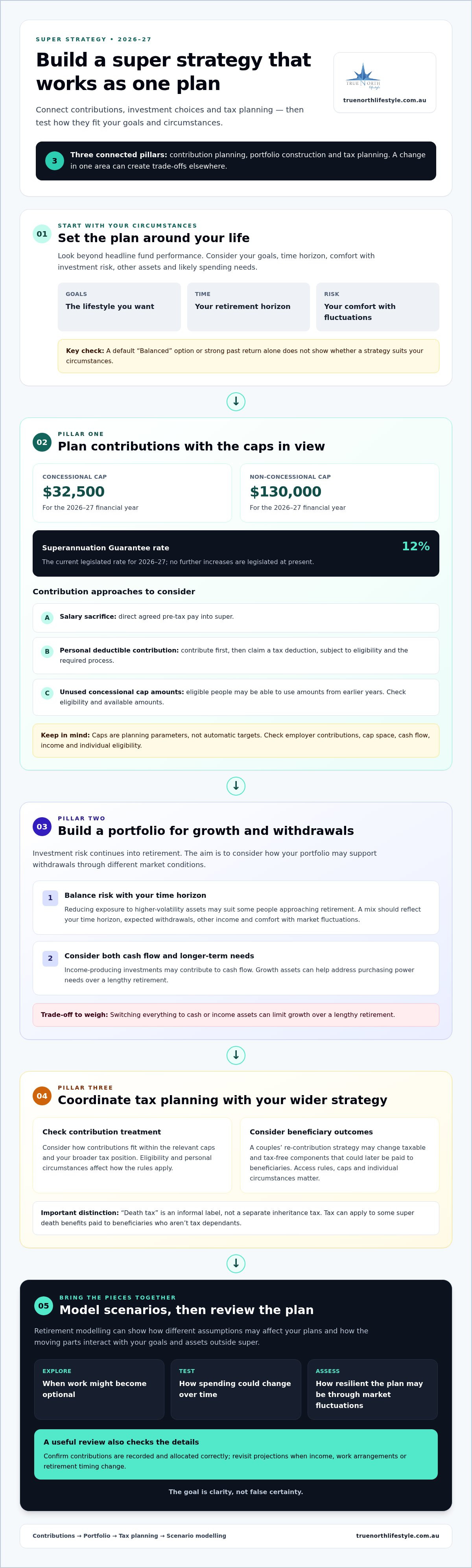
For the 2026 to 27 financial year, the Superannuation Guarantee rate is 12%. This is the current legislated rate, with no further increases legislated at present. It matters when projecting employer contributions, but it doesn’t replace a personal contribution strategy. The concessional contributions cap for the same year is $32,500, and the non-concessional cap is $130,000. Eligibility and individual circumstances affect how these limits apply, so treat them as planning parameters, not automatic targets.
Keep your strategy responsive to rules and ATO guidance. A review should consider:
- Whether employer and personal contributions are being recorded and allocated correctly.
- How contributions fit within the relevant caps and your broader tax position.
- Whether changes to your income, work arrangements or retirement timing call for updated projections.
Checking these details can reduce avoidable surprises and keep long-term plans grounded in current requirements.
The “Steady Navigator” Approach to Retirement
Numbers matter, but so do the choices they help you make. True North Lifestyle uses retirement modelling to connect portfolio decisions with practical questions: when work might become optional, how spending could change over time and how resilient your plan may be through market fluctuations. Bespoke portfolios are constructed with a focus on managing volatility and overseen by an in-house Investment Committee.
For residents of Miranda and across Sydney, retirement planning should account for real household priorities, including housing, family support, healthcare and the cost of maintaining a preferred lifestyle. No single return figure can tell you whether your super is on track. Scenario-based modelling shows how different assumptions may affect your plans, while estate planning strategy can connect retirement assets with longer-term wealth preservation. The goal is clarity, not false certainty.
The Three Pillars of Strategic Superannuation Optimisation
A resilient super strategy brings contributions, investments and tax planning together. Changing one part in isolation can create trade-offs elsewhere. A larger contribution may affect available cash flow, while a portfolio focused only on income may not provide the growth needed over a long retirement. The value of advice is in modelling how these moving parts interact with your goals and assets outside super.
Maximising Contributions for Long-Term Growth
For 2026 to 27, the concessional contributions cap is $32,500 and the non-concessional cap is $130,000. Salary sacrifice directs agreed pre-tax pay into super. A personal deductible contribution involves contributing first and then claiming a tax deduction, subject to eligibility and the required process. The suitable approach depends on your income, cash flow, employer contributions and available cap space. The Australian Taxation Office (ATO) guidance on superannuation explains the rules. A projection can help show how they apply to your circumstances.
Eligible people may also be able to use unused concessional cap amounts from earlier years, potentially increasing contributions during higher-earning years. Check eligibility and available amounts before acting. For couples, a re-contribution strategy may involve withdrawing eligible super and contributing it again, with the aim of changing the taxable and tax-free components that could later be paid to beneficiaries. It isn’t a universal way to avoid tax: access rules, contribution caps and individual circumstances all matter. “Death tax” is an informal label, not a separate inheritance tax. Tax can apply to some super death benefits paid to beneficiaries who aren’t tax dependants.
Portfolio Construction and Risk Management
Investment risk doesn’t disappear at retirement. The question is whether your portfolio can support withdrawals and remain sustainable through different market conditions. Reducing exposure to higher-volatility assets may suit some people approaching retirement. However, switching everything to cash or income assets can limit growth over a lengthy retirement. A suitable mix takes account of your time horizon, expected withdrawals, other income and comfort with market fluctuations.
True North Lifestyle constructs bespoke portfolios with a focus on managing volatility, under the oversight of its in-house Investment Committee. Income-producing investments may contribute to cash flow, while growth assets can help address longer-term purchasing power needs. Test the balance against downside scenarios rather than choosing investments based on recent returns.
Make Super Work With Your Other Assets
Super is one part of your financial structure. Coordinating it with investments outside super can clarify where income may come from, which assets could be drawn on first and how tax considerations interact. For example, a couple with different super balances and external investments may benefit from a household-level plan rather than two unrelated portfolios. Retirement modelling can compare those pathways and make the trade-offs easier to understand.
For a considered review of your contributions, portfolio and long-term projections, explore True North Lifestyle’s superannuation optimisation guidance.
Comparing Super Structures: SMSF vs Industry vs Retail Funds
The right super structure isn’t determined by your balance alone. It depends on how much control you want, the investment options you need and how much time and administration you’re prepared to take on. Compare each option with your broader financial position. A more complex structure doesn’t automatically produce a better outcome.
- Industry funds can suit people who value a straightforward, pooled investment approach and want fund administration handled for them. A lower-cost option may be a sound choice if its investment options and services meet your needs.
- Retail funds and wrap platforms can provide access to a broader or more tailored investment menu, with consolidated reporting that may help you track a bespoke portfolio. Consider the combined costs of administration and underlying investments.
- Self-managed super funds (SMSFs) give trustees greater control over investment decisions, alongside substantial responsibility for running the fund and meeting its obligations.
Is an SMSF Right for Your Lifestyle?
Control comes with responsibility. Trustees are accountable for investment decisions, records and ongoing compliance, so weigh the time and administration against the specific benefits you expect. An SMSF may allow investment in assets such as direct property, physical commodities or unlisted assets, but those choices must fit the fund’s rules and investment strategy. For trustees considering tangible holdings, sourcing investment-grade metals via dealers such as VIP Vaults & Bullion Exchange Perth requires ensuring that strict storage, auditing and insurance rules are satisfied. For a business owner in Miranda, the key question is whether the structure supports a clear retirement objective, not simply whether it can hold a preferred asset.
Consider the trade-offs alongside your household and business commitments. A structure that needs regular attention may not suit someone who wants a simpler arrangement, even if they value investment choice. Particular investment or planning needs may, however, justify exploring the extra responsibility with considered advice.
The Wrap Account Advantage for Bespoke Portfolios
A retail wrap platform can bring investments and reporting together in one view, which may make portfolio oversight and asset modelling more precise. It can support a tailored investment mix without transferring trustee responsibilities to you in the way an SMSF does. The platform itself doesn’t make a strategy bespoke. The portfolio still needs to reflect your goals, risk tolerance and retirement horizon.
Compare the strategic value with the full cost picture. Look beyond an administration charge to consider investment costs and any other applicable charges. Then weigh those costs against the reporting, choice and oversight you receive. A lower-cost structure may be the better fit when it meets your needs; a more flexible one may be worthwhile when that flexibility serves a defined purpose.
Good superannuation advice Australia should make these trade-offs clear. True North Lifestyle’s review and optimisation work considers structure alongside retirement projections and portfolio sustainability, helping residents of Miranda and Sydney assess which arrangement fits their circumstances instead of choosing based on balance or headline cost alone.
How to Conduct a Comprehensive Superannuation Review
A useful review does more than check your balance. It tests whether your accounts, insurance and investment approach still support the retirement you want. For households in Sydney and the Sutherland Shire, projections should reflect personal spending needs, housing plans and family commitments rather than rely on a generic calculator alone.
- Find and assess every account. List your current and former super funds, then check for duplicate accounts, fees, investment options and insurance. Consolidating may reduce fee leakage, but first consider whether you’d lose insurance cover or other features. Understand what will happen to any cover before transferring or closing an account.
- Review insurance inside super. Record the type and level of cover, premiums and relevant conditions. Consider whether the cover remains appropriate for your circumstances and whether premiums are reducing your retirement savings. Don’t cancel existing cover without understanding the consequences and how any replacement cover would work.
- Compare performance on a like-for-like basis. Look at returns after fees and compare options with similar investment objectives and risk levels over relevant periods. A headline return alone can mislead because it may not reflect the costs you pay or the volatility you’re prepared to accept.
- Stress-test the portfolio. Model how withdrawals might interact with a market fall early in retirement. This sequence-of-returns risk matters because selling investments after a downturn may leave less capital invested for a recovery. Test different withdrawal and market scenarios rather than relying on one smooth projection.
The Hidden Costs of Inaction
Small details can compound. A legacy fund may still suit you, but outdated investment settings, overlapping accounts or insurance premiums that no longer fit your needs deserve attention. A superannuation review in Australia can bring these moving parts into view and help you decide which changes are worthwhile. A transfer isn’t automatically the right way to simplify your paperwork.
Model Your Future Lifestyle
Your balance shows what you have today. Cash-flow modelling explores how your resources may support your lifestyle over time. Include expected spending, income sources, planned retirement timing and the effect of inflation. Housing costs and family priorities vary widely across NSW, so use assumptions that reflect your situation rather than a broad regional average. The aim is to define an achievable “enough” figure and understand how sensitive it is to changing circumstances.
True North Lifestyle combines retirement modelling with superannuation review and optimisation to help turn your findings into a coherent plan. To examine your accounts, insurance and retirement projections together, arrange a superannuation review with True North Lifestyle.
Bespoke Super Strategies: The True North Difference
Super decisions affect more than your account balance. The way you draw income, structure assets and nominate beneficiaries can influence your retirement flexibility and the wealth you hope to pass on. A coordinated strategy considers these elements together instead of treating super as a standalone investment. For households in Miranda and across Sydney, that means grounding advice in personal goals, family circumstances and long-term projections.
Transition to Retirement (TTR) Mastery
For eligible people aged 60 or over who are still working, a Transition to Retirement (TTR) income stream may provide access to some super while employment continues. In some circumstances, combining TTR income with salary sacrifice can help manage taxable income while maintaining contributions. The outcome depends on your age, income, super balance and applicable rules, so model the cash flow and tax effects before making changes. A TTR strategy should support your retirement plans in Sydney, not simply aim to increase your super balance.
Consider how a TTR arrangement fits your final working years. Do you need extra income now? How much can you continue contributing? Would the strategy remain sustainable if your retirement date changed? Professional modelling can compare scenarios and make the trade-offs clearer.
Secure Your Legacy
Super doesn’t automatically form part of your estate. A binding death benefit nomination can direct a fund trustee on who should receive your super death benefit, subject to the fund’s rules and the nomination’s validity. Review nominations after significant family changes and understand who can receive benefits under the relevant rules. Tax treatment may also depend on the beneficiary and the components of the benefit.
A broader estate planning strategy in Australia can coordinate super nominations with your wider estate intentions. Testamentary trusts may be considered as part of a will-based plan to manage how assets are held for beneficiaries. Their suitability depends on family needs and circumstances, so consider how different arrangements work together as part of wealth preservation and intergenerational planning.
Bring Retirement, Centrelink and Investment Plans Together
Centrelink outcomes can be influenced by how assets and income are structured. Reviewing your position against relevant Age Pension means tests can help you understand how changes to super or other assets may affect potential entitlements. The aim is informed planning, not an assumed outcome. True North Lifestyle combines retirement modelling, Centrelink structuring and tax-minimisation strategies to assess these decisions in context.
That joined-up view also informs investment choices. Research-driven portfolio construction, overseen by an in-house Investment Committee, focuses on managing volatility while considering the role your assets play in retirement and wealth transfer. Explore how bespoke investment advice in Sydney can support a long-term family strategy. Considered superannuation advice Australia can help connect today’s retirement needs with the legacy you want to create.
Give Your Retirement Strategy a Clear Next Step
Your next move doesn’t need to be a sweeping change. Start with a clear question: does your current super strategy still support the future you want? A review can turn that question into practical priorities, so decisions feel deliberate rather than driven by market noise or uncertainty.
For people seeking superannuation advice Australia, True North Lifestyle brings research-driven Investment Committee oversight, bespoke retirement modelling and financial planning in Miranda to complex decisions. The focus is a strategy shaped around your circumstances, with a considered path forward rather than a one-size-fits-all answer.
Book a strategic superannuation review with our Miranda team and take the next step towards greater clarity and confidence in your retirement planning.
Frequently Asked Questions
How much superannuation advice do I actually need in 2026?
It depends on how complex your finances are and whether anything has changed. A targeted review may help after a career change, inheritance, relationship change or shift in retirement plans. More involved circumstances may call for broader modelling. Good superannuation advice Australia should answer your current questions and set out what to revisit, rather than assume you need the same level of support every year. Keep a record of decisions and review them when your circumstances change.
Can a financial adviser help me choose between an industry fund and an SMSF?
Yes. An adviser can compare how each structure fits your investment needs, willingness to manage administration and wider financial position. If you want to invest in a particular asset, for example, the discussion should cover whether the structure permits it and what ongoing responsibilities follow. An SMSF isn’t automatically preferable just because you want greater control. For Miranda households, a structured comparison can clarify whether that control is worth the extra trustee responsibilities.
What are the concessional contribution limits for the 2026 financial year?
For the 2026 to 27 financial year, the concessional contributions cap is $32,500. It generally counts employer contributions, salary sacrifice and personal contributions for which you claim a tax deduction. If you exceed the cap, tax and other consequences may apply, so check contributions across all funds before making an extra payment. Eligible people may be able to use unused cap amounts from earlier years, subject to the applicable conditions. Confirm the current rules with the Australian Taxation Office before acting.
Is it worth consolidating my super if I have multiple small accounts?
It can be, but compare each account before transferring. Check ongoing fees, investment options, insurance cover and any features you’d give up. Combining accounts might simplify administration, but closing a fund could end insurance that’s difficult or costly to replace. List each account’s balance, fees and cover, then compare the likely benefits and drawbacks. Don’t assume consolidation is worthwhile just because one account has a smaller balance.
How does professional superannuation advice impact my tax minimisation?
Advice can help you understand how contribution choices and retirement-income decisions interact with your broader tax position. An adviser can, for example, model the potential effect of a deductible personal contribution alongside your income and existing employer contributions, while checking relevant caps. The result depends on your circumstances and current rules, so don’t assume a general example predicts your tax outcome. Financial advice can inform a strategy, but it doesn’t replace tax return preparation or guarantee a particular tax result.
What happens to my superannuation if I retire in Sydney vs regionally?
Superannuation rules don’t change simply because you retire in Sydney rather than a regional area, but your spending needs may. Housing, transport, healthcare, travel and family support can vary depending on where and how you live. Someone staying in Sydney might plan for different housing costs than someone relocating regionally, while weighing the lifestyle trade-offs. Retirement modelling should use your intended location and realistic household budget, not assume every retiree faces the same costs.
Can I use my superannuation to help pay off my mortgage before I retire?
Usually, you can’t withdraw super just because you want to repay a mortgage. Access depends on meeting a condition of release under superannuation rules. Some eligible people may have limited access through a Transition to Retirement arrangement, but that isn’t the same as unrestricted access to their balance. Before changing contributions or planning a withdrawal, compare the effect on your loan and projected retirement income, and check the rules that apply to your circumstances.
What is the “death tax” on super and how can I avoid it for my kids?
“Death tax” is an informal term, not a separate tax on inheritances. Tax may apply to some super death benefits paid to beneficiaries who aren’t tax dependants, and the outcome depends on the benefit and recipient. Review your fund’s nomination requirements and how your super fits with your estate intentions. A strategy may help manage potential tax, but no approach can promise that tax will be avoided. Keep nominations under review as family circumstances change.


