

There isn’t one fee for financial planning for IT professionals in Sydney. The cost depends on the advice you need, the complexity of your finances and your goals. True North Lifestyle provides professional fees after a quote request, so you can understand the proposed work and weigh it against your priorities.
It’s reasonable to want clarity before deciding, particularly when superannuation, tax, debt and family priorities all affect your financial picture. A tailored plan can bring these moving parts together and help you understand your options in light of your longer-term goals.
This article explains what can affect advice fees, what financial planning may cover, and how superannuation, tax, debt and intergenerational goals fit together. You’ll also find practical ways to identify the advice you need before taking the next step.
Key Takeaways
- Understand which factors shape the scope and cost of a financial plan before deciding what advice you need.
- See how a joined-up financial strategy can connect wealth management with your priorities and longer-term goals.
- Learn what to consider when reviewing super contributions, investment choices, tax and debt.
- Explore how estate and intergenerational planning can help bring your legacy intentions into focus.
Estate, legacy and intergenerational planning
Estate planning connects your assets, superannuation and personal wishes with the people you want to support. Begin by identifying who you want to benefit and which arrangements need attention.
Estate planning
In Australia, estate planning can include making a valid will, setting powers of attorney and guardianship, lodging a binding superannuation death benefit nomination, and making advance health directives. Each addresses different decisions: a will covers your estate, while a superannuation nomination records who should receive a death benefit from your fund.
Review your nominated beneficiaries alongside your will. Life changes, such as having a child or a change in your relationship, can leave older arrangements out of step with your current intentions.
Legacy and intergenerational planning
Legacy planning goes beyond transferring assets. Consider what support you want to provide, who may need it and how to communicate your intentions clearly. For instance, a family may want to plan for a future inheritance while balancing retirement income and other financial commitments.
For a practical review, list your intended beneficiaries, relevant assets and existing arrangements. This helps you see where your plans reflect your wishes and where they may need attention.
Superannuation needs separate consideration because a death benefit nomination operates alongside your will, rather than simply repeating it. Check the nomination recorded with your fund and compare it with your current wishes. Also consider how your investments, property and super are distributed, so one transfer does not undermine another goal.
Diversification means spreading investments across assets, asset classes, industries and regions to reduce reliance on any single investment. Australian shares have underperformed global shares for 16 years, so consider whether your portfolio is overly concentrated in one market. According to the Australian Business Register, the ASIC registration is 009 176 354 ACN. These details provide a starting point for reviewing records and planning how wealth may pass between generations.
What is Financial Planning?
A financial plan connects everyday cash flow with investments, protection and longer-term priorities. For IT professionals in Sydney, it can also account for role changes, contracting income or employer shares.
When choosing an adviser, search the official Australian financial adviser register and review their authorisation and relevant experience. Ask how their advice would address your circumstances, such as variable income or a substantial shareholding.
Before engaging an adviser, read the written disclosures about services, fees, conflicts of interest and complaint handling. Make sure you understand the proposed advice and available complaint pathways before agreeing to proceed.
Financial planning and wealth management
Financial planning for IT professionals in Sydney can bring cash flow, investments and future goals into one decision framework. Wealth management puts that strategy into practice through investment structure, risk management and review. For example, a software engineer receiving company shares could assess whether those holdings create too much exposure to one employer.
Start with a snapshot of your income, expenses, debts, superannuation and investments. Then rank your priorities, such as saving for a home deposit or building a cash reserve. A budget shows what remains available for repayments and investing.
Planning for irregular contractor income
Contractors and freelancers can plan for uneven invoices by tracking payment dates, business expenses and upcoming tax instalments. Keep GST collected separate from operating cash, and set aside funds for tax commitments as income arrives. Review those amounts against actual revenue and expenses.
For example, after a large project payment, allocate money to GST and expected tax commitments before treating the remainder as available income. A cash-flow calendar can flag quieter periods, while a separate reserve can help cover household costs and repayments between contracts. This gives financial planning for IT professionals in Sydney a practical foundation when earnings fluctuate.
Superannuation optimisation and contribution strategies
Superannuation decisions can affect both your retirement income and the flexibility of your current budget. Compare contribution choices with your goals, cash flow and time until retirement.
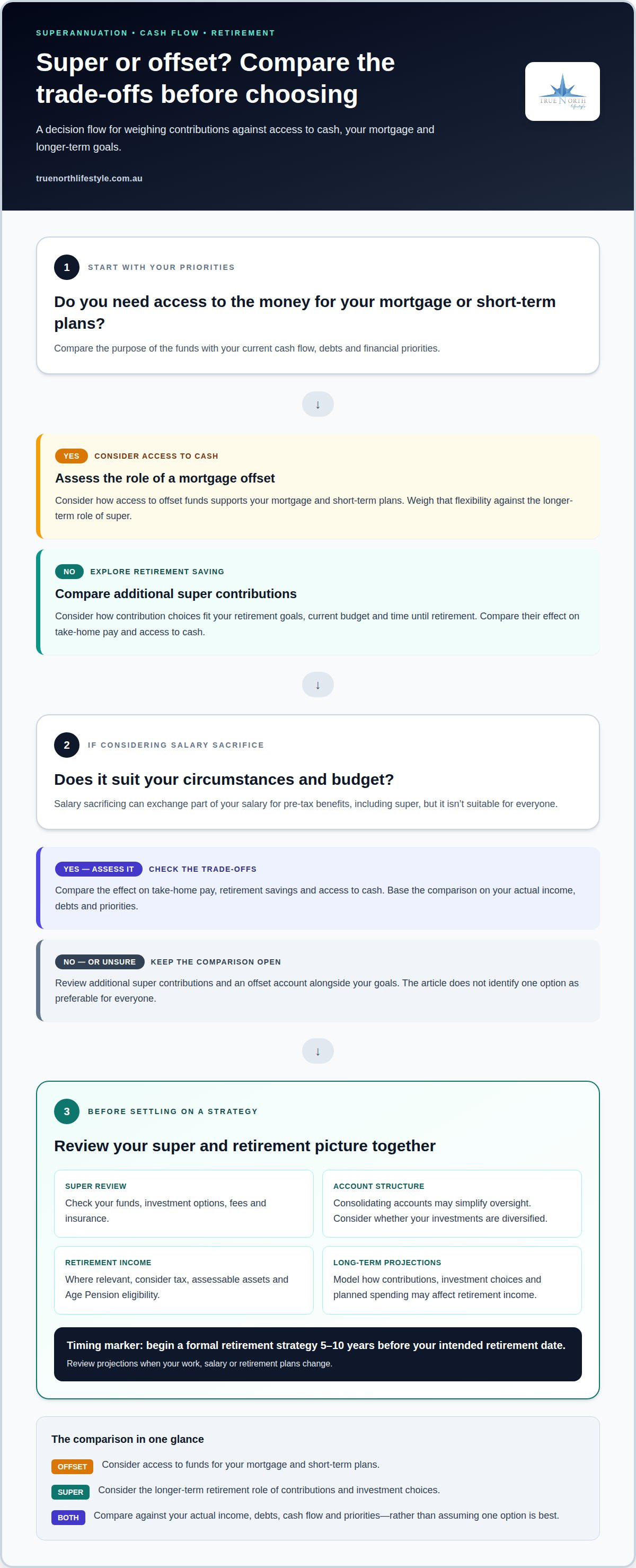
Salary sacrificing, additional super contributions and a mortgage offset serve different purposes. Compare their effects on take-home pay, retirement savings and access to cash. Salary sacrificing can exchange part of your salary for pre-tax benefits, including super, but it isn’t suitable for everyone.
With an offset account, consider how access to those funds supports your mortgage and short-term plans. Weigh this against the longer-term role of super, rather than assuming either option is preferable. A useful comparison reflects your actual income, debts and priorities.
A super review can begin with your current funds, investment options, fees and insurance. Consolidating accounts may simplify oversight, while checking diversification can help you avoid relying too heavily on one holding or market. When navigating financial planning for IT professionals Sydney, experts recommend diversifying investments, maximising super contributions and regularly reviewing a retirement plan.
Retirement income planning can also consider tax, assessable assets and Age Pension eligibility, where relevant. Maximising income may involve reviewing super contributions, consolidating accounts, diversifying investments and reducing assessable assets. The appropriate mix depends on how these decisions interact with your retirement goals and other resources.
Begin a formal retirement strategy 5-10 years before your intended retirement date. This gives you time to model how contribution levels, investment choices and planned spending may affect your income. Review the projections when your work, salary or retirement plans change.
Include insurance in the same review. Consider income protection in relation to lost earnings, life cover in relation to financial dependants, and total and permanent disability (TPD) cover in relation to lasting changes in your ability to work. Compare each type with your existing cover, debts and household responsibilities.
For example, an employee with a mortgage and dependants may assess income protection, life and TPD cover alongside super. Before reviewing options, record your current contributions, account details, debt commitments and insurance. This snapshot helps link today’s cash flow with a sustainable retirement income strategy.
Tax-effective investing and debt reduction
Investment decisions work best when they reflect your tax position, cash flow and tolerance for risk. For technology workers, shares, bonuses and changing roles can add complexity.
Diversification and debt reduction
Start by listing each investment, debt and financial goal. Employer shares can create concentration risk: a fall in the company’s value may affect both your portfolio and employment prospects. Job changes, redundancy or burnout can also interrupt income, making accessible savings and manageable repayments important.
Set your goals and direct regular savings towards an emergency fund, then compare debt repayments with investing. Consider interest costs, access to cash and how each choice supports your priorities. Diversification spreads investments across assets, industries and regions, reducing reliance on a single holding.
For example, an employee whose portfolio is centred on one technology employer could review exposure across other investments. A tax-aware investment strategy also considers how buying, holding or selling assets may affect your overall position.
Tax strategies for salary and shares
Australian employee share schemes and tech-company stock options can have different tax treatment depending on scheme terms and when shares or rights are acquired, exercised or sold. Review scheme documents and transaction records to understand the relevant tax events.
For salary and bonuses, organise payslips and payment records, then consider how variable income affects cash flow and investment decisions. Keep records of work-related expenses and assess their connection to earning income before including them in tax planning.
To build wealth, define a goal, establish an emergency reserve and invest consistently in line with your timeframe and risk tolerance. Review the plan after a promotion, role change or redundancy, when income and employer-share exposure may shift. If your investment choices, tax position and debt decisions need to work together, consider tax-minimisation strategies as part of a broader plan.
True North Lifestyle: Retirement modelling & long-term projections
True North Lifestyle helps turn financial priorities into a structured plan through retirement modelling and long-term projections. This can be a useful next step if you want to understand how your savings, superannuation and investment decisions may shape your retirement outlook.
Projections can help you compare scenarios, such as changing contributions or your intended retirement timing. A superannuation review and bespoke portfolio construction can then show how your strategy aligns with those goals. Tax-minimisation strategies may also be relevant when reviewing investment decisions and income needs.
The aim is to connect the moving parts, not treat each choice in isolation. Contact True North Lifestyle to discuss a tailored financial plan for your circumstances.
Set your next planning priorities
Start by deciding what you want financial advice to help you resolve. Identify the decisions that matter most now, then consider what a useful outcome would look like in everyday life. You may want a clearer way to assess trade-offs or to feel better prepared for a major financial decision.
For financial planning for IT professionals in Sydney, a focused conversation can begin with your priorities, the decisions ahead and where you want greater clarity. You don’t need to arrive with every answer. A straightforward outline of what has changed and what you hope to achieve can make the discussion more relevant.
When you’re ready to take that step, contact True North Lifestyle to discuss your planning needs. A considered approach can help you move forward with greater purpose and confidence.
Frequently Asked Questions
How Much Does a Financial Plan Cost?
The cost depends on the advice required, your financial circumstances and the work involved. A focused review differs from comprehensive advice covering investments, superannuation and retirement modelling. The price depends on your case and is provided after a quote request; factors include the scope, complexity and ongoing service required. Before proceeding, clarify what the advice covers and how implementation or future reviews are treated.
Why Should I Pay for Financial Advice?
Paid advice can help you assess connected decisions with a clearer view of the trade-offs. For example, an IT professional weighing a job change, company shares and a home deposit may need to consider cash flow, investment concentration and longer-term priorities together. Advice can organise these questions into a decision framework, explain the reasoning behind a strategy and identify what to revisit when circumstances change.
What financial planning services do IT professionals in Sydney commonly need?
Common priorities include reviewing superannuation, planning investments, managing tax considerations and modelling retirement goals. A professional with employer shares may also want to assess portfolio concentration, while someone planning to support family members may include estate and intergenerational goals. For people in Miranda 2228, Sydney 2000, the relevant advice depends on their mix of salary, investments, super and personal objectives.
How much do financial advisers in Sydney charge, and what fees should IT professionals expect?
There isn’t one fee for every advice engagement. The cost depends on whether you need a focused strategy, comprehensive planning, implementation or ongoing portfolio oversight, as well as your circumstances and goals. True North Lifestyle provides a fee after a quote request. Review the proposed scope alongside the fee structure to understand what work and follow-up it covers.
What superannuation contribution strategies and caps apply to high-income IT professionals in 2026?
In 2026, contribution planning needs to account for the applicable concessional and non-concessional caps. A high salary alone doesn’t determine a suitable contribution strategy. First reconcile employer and personal contributions against your super records, then consider how additional contributions fit your cash flow and retirement plans. Review the current cap amounts and your contribution history before deciding what to contribute, especially if income varies.


