

A will alone may not cover everything. In Australia, superannuation does not automatically form part of your estate or pass under your will. For high-net-worth individuals in the Sutherland Shire, estate planning means considering how your will, superannuation, trusts and jointly held assets work together during your lifetime and after your death.
It can be hard to know where to start when family relationships and substantial assets intersect. A clear plan sets out how wealth should be managed and passed on, while accounting for blended families, potential disputes and the needs of younger or vulnerable beneficiaries. This guide explains how testamentary trusts may shape an inheritance, what to consider before making lifetime gifts and how legal advice fits into the process. It also shows how financial planning can align your broader wealth strategy with your estate intentions, making the next steps more manageable.
Key Takeaways
- Consider whether a testamentary trust could help manage how beneficiaries receive and use an inheritance.
- Review superannuation nominations alongside your will, particularly when your family includes a current partner and children from an earlier relationship.
- Weigh the tax and ownership consequences of lifetime gifts before transferring assets, and consider whether staged support better suits your family’s needs.
- Bring legal and financial planning together so your documents, superannuation and broader wealth strategy work towards the same goals.
Can trusts improve estate planning outcomes?
A will can establish a testamentary trust that takes effect after the will-maker’s death. Its terms can determine who controls the assets and when beneficiaries receive them.
Testamentary trusts in wills
A testamentary trust is created through a will and does not operate during the will-maker’s lifetime. The will sets out how assets are transferred into the trust and who may benefit. For example, a parent could arrange for a trustee to manage an inheritance for children until they are ready to manage the wealth themselves. Dedicated legal document services such as aikerwillsandtrusts.org can assist in preparing comprehensive wills and trust structures tailored to protect beneficiaries. The will should reflect the family’s circumstances and intended timing of distributions.
Trust tax planning and asset protection
Distributing income among beneficiaries
A testamentary trust can give a family greater control over how and when beneficiaries receive an inheritance. It can also allow income to be distributed among beneficiaries in a tax-effective way. Australian testamentary trusts can distribute income to family members, including children under 18 years of age, using adult tax thresholds. This may matter where a child needs support but isn’t ready to control substantial assets. When developing the terms, consider the beneficiaries’ ages, needs and capacity to manage money, then align distribution powers with those priorities. A clear plan helps trustees make decisions within the will’s instructions.
How does estate planning protect blended families?
A blended-family estate plan needs to account for both your will and superannuation, which may pass separately. Clear decisions about beneficiaries and assets can reduce misunderstandings, although they cannot prevent every dispute.
Superannuation in retirement and estate planning
Superannuation decisions affect your retirement income and the wealth that may eventually pass to beneficiaries. A will does not override superannuation: without a binding death benefit nomination, the fund trustee may decide who receives the benefit. Consider how your retirement plans, intended recipients and testamentary arrangements fit together, especially if you have a current partner and children from an earlier relationship. Super paid to a spouse is tax-free, while payments to an adult child can be taxed.
For a standard binding nomination, Regulation 6.17A of the Superannuation Industry (Supervision) Regulations 1994 provides that it lapses after three years unless renewed. Review the nomination as family circumstances change, and align its instructions with your wider estate plan. If you have a self-managed superannuation fund, include succession planning for the fund’s decision-making and administration, alongside the intended distribution of benefits.
Family provision claims and disputes
In NSW, an eligible person may make a family provision claim under Chapter 3 of the Succession Act 2006 (NSW). Section 57 defines an eligible person, and a claim must generally be made within 12 months after the deceased person’s death. A plan can reduce grounds for confusion by clearly recording intended beneficiaries, considering family relationships and explaining how assets are to be dealt with. It cannot remove a person’s right to bring a claim.
For blended families, careful planning means considering a surviving partner’s needs alongside children’s inheritance, rather than relying on assumptions about what a will covers. Aligning superannuation nominations with the wider plan can make your intentions clearer. A superannuation review and optimisation can help assess how retirement arrangements fit your intended legacy.
Tax and asset transfer risks when gifting during life
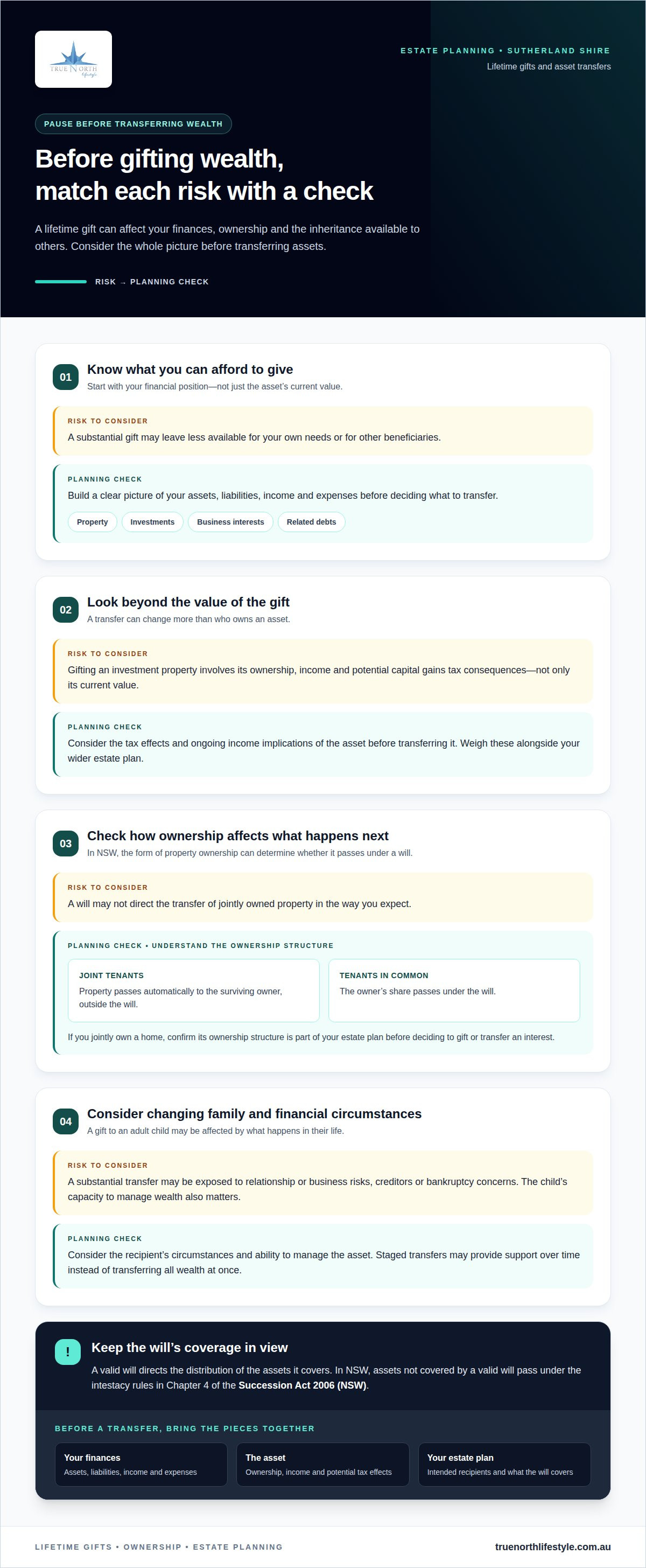
Before transferring wealth, consider tax effects, ownership and how a gift may affect future inheritance. In NSW, assets not covered by a valid will pass under the intestacy rules in Chapter 4 of the Succession Act 2006 (NSW).
Assessing assets and finances
Start with a clear picture of your assets, liabilities, income and expenses. Include property, investments, business interests and any related debts. This helps show what a lifetime gift would leave available for your needs and other beneficiaries. For example, gifting an investment property means considering its ownership, income and potential capital gains tax consequences, not just its current value.
Jointly owned assets and probate
How an asset is owned can affect whether it passes under a will. In NSW, property held as joint tenants passes automatically to the surviving owner outside the will. Property held as tenants in common passes under the will. If you jointly own a home, confirm its ownership structure forms part of your estate plan before deciding whether to gift or transfer an interest.
Asset protection from relationship risks
A gift to an adult child may become exposed to changing financial or relationship circumstances. Consider the child’s capacity to manage wealth, business risks and possible creditor or bankruptcy concerns before transferring substantial assets. Children’s relationships in their 20s and 30s can also affect how intended inheritance is protected. Staged transfers may let families provide support over time rather than transferring all wealth at once.
Asset distribution and succession laws
A valid will directs the distribution of the assets it covers, while NSW intestacy rules apply to assets left outside it. Review how ownership, lifetime gifts and your will fit together, particularly when beneficiaries receive different forms of wealth. For example, a prior gift to one child may affect the family’s expectations about what remains for others. Recording the purpose and intended treatment of transfers can clarify your distribution plan and reduce the risk of disputes.
Estate planning lawyers in Sutherland and nearby suburbs
Start by aligning your wishes with how your assets are owned and transferred. Estate planning for high-net-worth individuals in the Sutherland Shire involves distinct but complementary roles for legal and financial planning.
Creating a high-net-worth estate plan
A solicitor drafts legal documents, while a financial adviser considers how your will, superannuation and trusts relate to tax and Centrelink rules. Estate planning in the Sutherland Shire can include a will, testamentary trusts, enduring powers of attorney, advance health directives and estate administration. Coordination matters when your assets include property, business interests and superannuation.
For an initial discussion, gather photo identification, property or mortgage records, superannuation statements, bank details and any existing wills or powers of attorney. Outline your wishes for your partner, children and other beneficiaries, including the reasons for any unequal inheritance. This gives the professionals involved a clearer picture of your circumstances and priorities.
Updating estate planning documents
Review your documents every three to five years or after a major life event. In NSW, marriage revokes an existing will unless it was made in contemplation of that marriage. Divorce cancels gifts in an existing will to a former spouse. A change in your relationship, property ownership or family circumstances can make an earlier plan inconsistent with your intentions.
During an update, compare your current documents with your assets, intended beneficiaries and superannuation arrangements. For estate planning for high-net-worth individuals in the Sutherland Shire, this can help bring changing family and financial priorities into focus. Discuss the effect of changes with your solicitor, and consider an estate planning strategy as part of your financial planning.
True North Lifestyle: Estate planning strategy
True North Lifestyle helps connect your estate intentions with your wider financial position. Its estate planning strategy can bring wealth preservation together with retirement modelling, tax-minimisation strategies and superannuation review, clarifying how these elements relate to your long-term plans.
This can be useful when family circumstances change, you are considering lifetime gifts, or your retirement and inheritance plans need to work together. Financial strategy complements legal advice: a solicitor prepares wills and other legal documents, while financial planning considers how your assets, superannuation and future income fit your objectives.
Contact True North Lifestyle to discuss how an estate planning strategy could support your financial plans.
Set a clear direction for your family’s future
Your next step is to turn broad intentions into decisions that reflect your family’s priorities. Estate planning for high-net-worth individuals in the Sutherland Shire means being clear about what matters most, who should be involved and which financial decisions need attention first.
Consider what you want your wealth to make possible for the next generation and how your plans can support that purpose over time. Alongside financial provisions, preserving personal stories and legacy matters to many families, with platforms such as Remembering You providing a dedicated space to honour loved ones and celebrate their life. A focused discussion can connect those priorities with your wider financial position and identify issues to address with your legal adviser. You do not need every detail resolved before taking the first step.
True North Lifestyle can help you bring your financial priorities into focus. Contact True North Lifestyle to discuss your next steps and move forward with greater clarity.
Frequently Asked Questions
Not sure where to start with estate planning?
Begin by clarifying what you want your plan to achieve and which decisions feel urgent. List your major assets, debts, family relationships and existing documents, then note questions about control, access or inheritance. For example, a business owner may need to consider who can make financial decisions if they lose capacity. This outline helps you have a focused first discussion with your solicitor and financial adviser.
What are common mistakes in estate planning?
Common pitfalls include leaving documents unchanged after a major life event, overlooking assets that pass outside a will and assuming every beneficiary will understand your intentions. Review your plan after changes such as a new relationship, business sale or property purchase. Check that the people named to make decisions still have the capacity and willingness to take on those responsibilities.
Why involve a financial adviser in estate planning?
A financial adviser helps connect your estate intentions with retirement income, superannuation and your wider financial plan. For example, a proposed gift could affect the assets available to fund your later-life needs. An adviser can model long-term projections, review superannuation arrangements and consider tax-minimisation strategies. A solicitor handles legal documents, while financial advice shows how those documents relate to your financial position.
Can I challenge a will if I feel left out?
Possibly, if you’re an eligible person under NSW law. Chapter 3 of the Succession Act 2006 (NSW) covers family provision claims, which must generally be made within 12 months after the person’s death. Feeling overlooked alone doesn’t establish the basis of a claim. Keep records of your relationship, financial circumstances and any support provided, then obtain advice promptly about eligibility and the estate’s circumstances.
Do I need a will if I have super nominations?
Yes, a will still serves a separate purpose. A superannuation nomination relates to a death benefit held by a super fund, while a will sets out instructions for estate assets and can address matters such as personal belongings or guardianship wishes. For instance, a parent may need to plan for a child’s care as well as nominate superannuation beneficiaries. Keep both arrangements consistent with your intentions.
How much do estate planning lawyers cost in Sutherland, NSW?
The total depends on the work involved, such as preparing a straightforward will or addressing trusts, business interests and blended-family arrangements. Ask for a clear explanation of the proposed scope and billing basis before work begins, so you understand what legal assistance covers and how the estimate relates to your circumstances.


