

Aged care doesn’t come with one fixed cost. If you’re looking for aged care advice near me in Miranda, understanding how charges are assessed can help you plan and weigh the choices ahead.
It’s understandable to want a clear picture of costs before deciding what support may be needed. This guide explains assessed contributions, the residential Basic Daily Fee, and signs that extra help at home or a move into residential care may warrant closer consideration. It also shows how to factor care costs into a broader retirement plan, alongside personal needs and long-term priorities.
Key Takeaways
- Support at Home contributions may vary with a person’s financial circumstances, so consider how they could affect the amount payable.
- Look for changes in daily tasks, safety, wellbeing or the pressure on family carers as possible signs that extra support may be needed.
- Set out care needs, income, assets and likely expenses together to build a clearer view of how aged care could affect longer-term plans.
- Retirement modelling can help connect care costs with superannuation, tax strategies and the sustainability of your broader financial position.
Care costs and assessed contributions
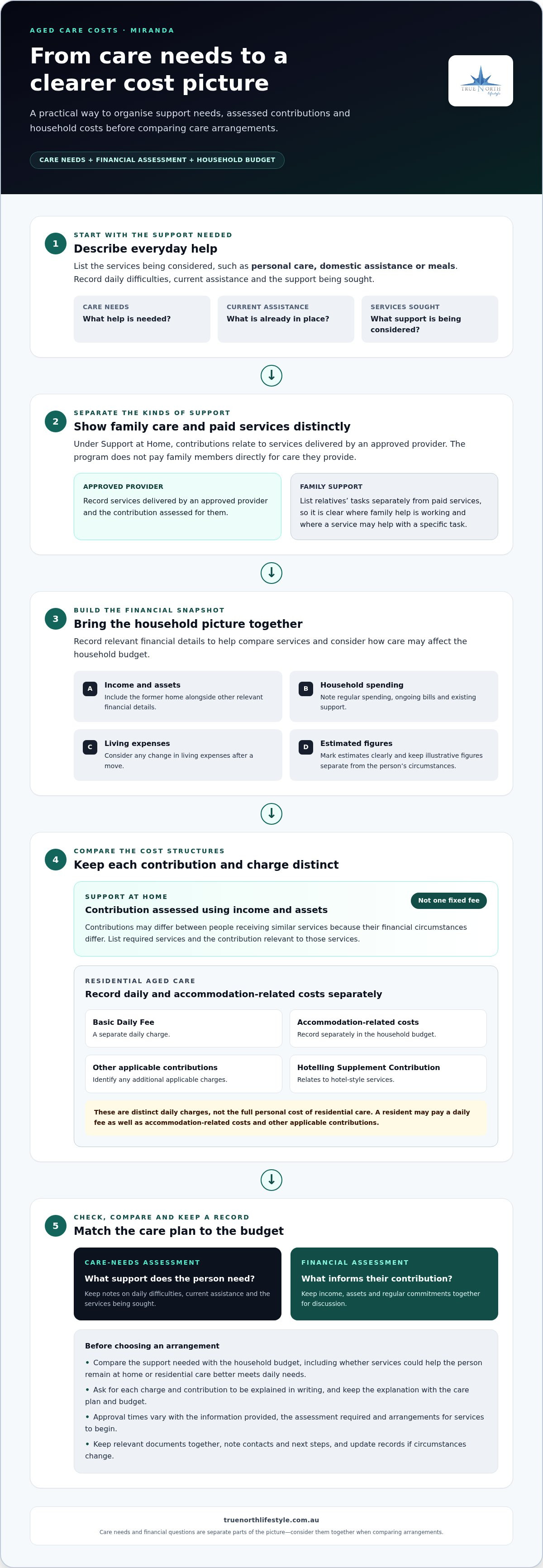
Aged care costs in Australia depend on the support type and how a person’s contribution is assessed. For Support at Home, contributions are based on income and assets, rather than one fixed fee. Two people receiving similar services may therefore have different contributions because their financial circumstances differ. For families seeking aged care advice near me in Miranda, separating care needs from financial questions can make the options easier to compare.
Start by listing the help needed, such as personal care, domestic assistance or meals. Record regular income, household spending and existing support, too. This gives families in Miranda and the wider Sutherland Shire a practical basis for comparing services and considering how care may affect the household budget.
Under Support at Home, contributions relate to services delivered by an approved provider. The program doesn’t pay family members directly for care they provide. Record relatives’ tasks separately from paid services. This makes it easier to see where family support is working well and where a service could help with a specific task.
Residential aged care has several distinct cost components. These amounts illustrate separate daily charges, not the full personal cost of residential care.
Consider daily care and living costs together. A resident may pay a daily fee as well as accommodation-related costs and other applicable contributions. The Hotelling Supplement Contribution relates to hotel-style services, while the Basic Daily Fee is a separate charge. List each item separately in your budget so you don’t mistake one daily amount for the total cost.
A side-by-side comparison can help organise the information:
- Support at Home: list required services and note that contributions are assessed using income and assets.
- Residential care: record the standard Basic Daily Fee and identify other applicable charges separately.
- Household position: set out income, assets, ongoing bills and any change in living expenses after a move.
- Family support: distinguish unpaid care from services delivered by an approved provider.
A care-needs assessment and a financial assessment answer different questions. The first helps establish the person’s support needs; the second informs their contribution. Keep a record of daily difficulties, current assistance and the services being sought. This helps families understand the care plan and consider its financial impact.
Approval times vary depending on the information provided, the assessment required and arrangements for services to begin. Keep relevant documents together, respond promptly to requests and note who you have contacted and what happens next. If progress pauses, a written record can help identify the outstanding step while keeping track of the person’s changing needs.
Before choosing an arrangement, compare the support needed with the household budget. Consider whether services could help the person remain at home or whether residential care better meets their daily needs. A search for aged care advice near me in Miranda may begin with a cost question. The practical next step is to consider care needs, assessed contributions and living expenses together.
The financial assessment is easier to discuss when household assets and regular commitments are clearly recorded. Include the former home alongside other relevant financial details, and mark which figures are estimates. This is an example figure, not a guide to another person’s home value or contribution. Keep the person’s circumstances separate from illustrative examples, and ask the relevant aged care adviser how the assessment applies to them.
Before deciding, prepare questions about the information needed, how a change in living arrangements may affect the assessment, and when to review the person’s position. Ask for each charge and contribution to be explained in writing, and keep the explanation with the care plan and household budget. If circumstances change, update the records and seek clarification rather than relying on an earlier estimate. This helps families compare care arrangements with a clearer understanding of the support being considered and the financial questions still to resolve. A careful discussion can also help relatives agree on what they can provide and what support should come from services.
Signs that extra support may be needed
Changes in everyday routines can indicate that a person needs more help than family care alone can provide. Look for repeated difficulties, not just a single missed task. For example, a parent who once shopped independently may return without essentials or feel unsure on familiar routes. Note what happened, when it occurred and what support helped.
Personal care can become harder, too. Notice whether dressing, bathing, grooming or preparing meals takes much longer, causes distress or is being avoided. A once-comfortable routine may change because of reduced mobility, tiredness or difficulty following several steps. Record the specific task and its effect rather than assuming why the change has occurred.
Household tasks can offer practical clues. Unwashed laundry, spoiled food, unopened mail or clutter along usual pathways may indicate that daily jobs are becoming difficult. For example, someone may stop changing the bedding because lifting and carrying it feels unsafe. Ask what they find hardest, then distinguish the tasks they can still manage from those that need assistance.
Changes in confidence matter, too. Someone may stop visiting friends, attending local activities or shopping after a fall or difficult journey. They might also avoid parts of the home, such as the stairs or bathroom. Ask what specifically concerns them and whether a small adjustment or regular support would help them feel comfortable again.
Carers need support, too. A family member who regularly misses work, loses sleep or feels exhausted may be taking on more than they can sustain. Keep a shared record of who provides meals, transport, laundry and personal assistance. This shows where caring tasks are concentrated and helps relatives discuss a fairer arrangement.
Use a simple observation list to prepare for a family discussion or care assessment:
- Daily activities: note changes with meals, dressing, washing, shopping and household chores.
- Safety and confidence: record concerns about moving around the home or travelling locally.
- Social connection: note missed visits, activities or calls that matter to the person.
- Carer capacity: list the tasks relatives provide and how those duties affect their routines.
- Helpful support: describe what already works, such as meal preparation together or help with laundry.
Talk with the older person calmly and specifically. Instead of saying, “You can’t cope”, describe what you noticed: “The shopping bags were left by the door twice this week. Would help carrying them make things easier?” This respects their choices and opens a practical conversation. Ask what they want to keep doing independently, then discuss support around those priorities.
Bring examples to an assessment. A short written record can explain what happens on an ordinary day, what varies and which tasks are most difficult. Include the person’s preferences, existing support and any changes carers have noticed. Specific examples are more useful than broad statements such as “things are getting harder”.
Agree on a next step and review it. The family might arrange shared shopping, organise laundry help or discuss home support options based on the tasks recorded. If care needs are prompting broader family decisions, consider how to plan for future changes alongside the person’s preferences. Compassionate conversations, specific observations and a realistic view of carers’ capacity can guide a steadier response.
Describe what you have noticed and ask whether they would like help with a particular task. For example, explain that shopping has become difficult or laundry is being left undone, then listen to how the person sees the problem. Agree on a practical next step together and check later whether it helped. The aim is to understand what support the person wants and keep them involved in decisions about daily life. A shared record can also help family members explain which tasks are becoming difficult and what assistance is already in place.
When considering formal services, distinguish support delivered through a provider from the work family members do. Support at Home funds services delivered by an approved provider rather than directly paying family members for their care work. Information about a provider’s standards may also be relevant when discussing options: the Aged Care Quality and Safety Commission found that Miranda Aged Care Facility complied with all Accreditation Standards after an assessment contact on 22 February 2019. Keep any discussion focused on the person’s observed needs, preferences and safety, and on the support that would make everyday routines more manageable. Review the arrangement if circumstances change, so the help remains suited to the person and the family members involved.
True North Lifestyle: Retirement modelling & long-term projections
True North Lifestyle can help you consider aged care costs as part of a broader retirement plan. Its retirement modelling and long-term projections bring income, assets, planned spending and changing care needs into one view, helping you assess how different choices may affect your finances over time.
This can be useful when support needs are changing, residential care is under consideration, or family members are weighing the impact on future plans. Depending on your circumstances, a superannuation review, tax-minimisation strategies and bespoke portfolio construction may also form part of your financial plan.
For a clearer view of your retirement finances, contact True North Lifestyle or visit truenorthlifestyle.com.au.
Plan your next step with clarity
A care decision can raise wider questions about the retirement you want, the resources you need to retain and how your plans may change over time. If you’re looking for aged care advice near me in Miranda, bring these financial questions into the same discussion as your care priorities. A clear framework can help you make decisions at a manageable pace.
True North Lifestyle supports this planning with retirement modelling and long-term projections, alongside superannuation review and tax-minimisation strategies. These services help you consider how your financial position fits your priorities while keeping sight of the life you want to preserve.
When you’re ready to discuss your broader retirement plans, contact True North Lifestyle for advice. A considered next step can make future decisions feel more organised and grounded.
Frequently Asked Questions
What aged care financial advice is available in Miranda, including help with fees and Centrelink entitlements?
In Miranda, financial advice can help you understand how care decisions fit your retirement finances and Centrelink position. True North Lifestyle offers Centrelink structuring, retirement modelling and long-term projections, and superannuation review and optimisation. For example, when comparing support at home with residential care, these services can help organise income, assets and expected spending into a broader plan. They don’t replace the aged care assessment or determine payment eligibility.
How do residential aged care fees work, including the basic daily fee, means-tested fees and accommodation costs?
Residential aged care costs can include several separate items. Means-tested contributions depend on financial circumstances, while accommodation costs are a distinct part of the overall budget. Compare each charge separately rather than treating the daily fee as the full cost.
What home care services and supports are available for older people in Miranda and Sutherland Shire?
Support at Home may cover services such as personal care, domestic assistance and meals, delivered by an approved provider. The amount a person may contribute can vary with their circumstances. The program does not pay family members directly for unpaid care.
How can I compare aged care providers near Miranda for quality, services, availability and costs?
Compare the support each provider offers with the person’s care needs, then consider Support at Home contributions in light of income and assets. For residential care, record the Basic Daily Fee separately from accommodation costs and any other applicable contributions.


