

A higher income alone won’t build lasting wealth; the decisions around it matter. Financial planning for data scientists in Sydney can bring tax-effective investing, debt reduction, insurance protection, estate planning and retirement strategies into one coordinated plan, shaped around your income, goals and priorities.
Competing financial decisions can be difficult to prioritise, especially when you’re balancing career opportunities with plans for a home, family or greater flexibility later in life. A clear strategy shows how today’s choices connect to your longer-term goals, rather than treating each decision in isolation.
This article explains how a professional financial plan can address investment and debt priorities, superannuation, protection and estate planning, then model your progress towards retirement. You’ll also learn what shapes a tailored approach and when specialist guidance can help bring greater structure to the decisions ahead.
Key Takeaways
- Coordinate investment choices and debt priorities so your strategy supports both wealth building and financial flexibility.
- Plan how your assets, wishes and future care needs could be managed, with estate and aged-care considerations included.
- Use retirement projections to understand how superannuation and other assets may support the income and lifestyle you want.
- Bring housing costs, deposit goals and borrowing plans into your wider financial picture before making major commitments.
Tax-effective investing and debt reduction
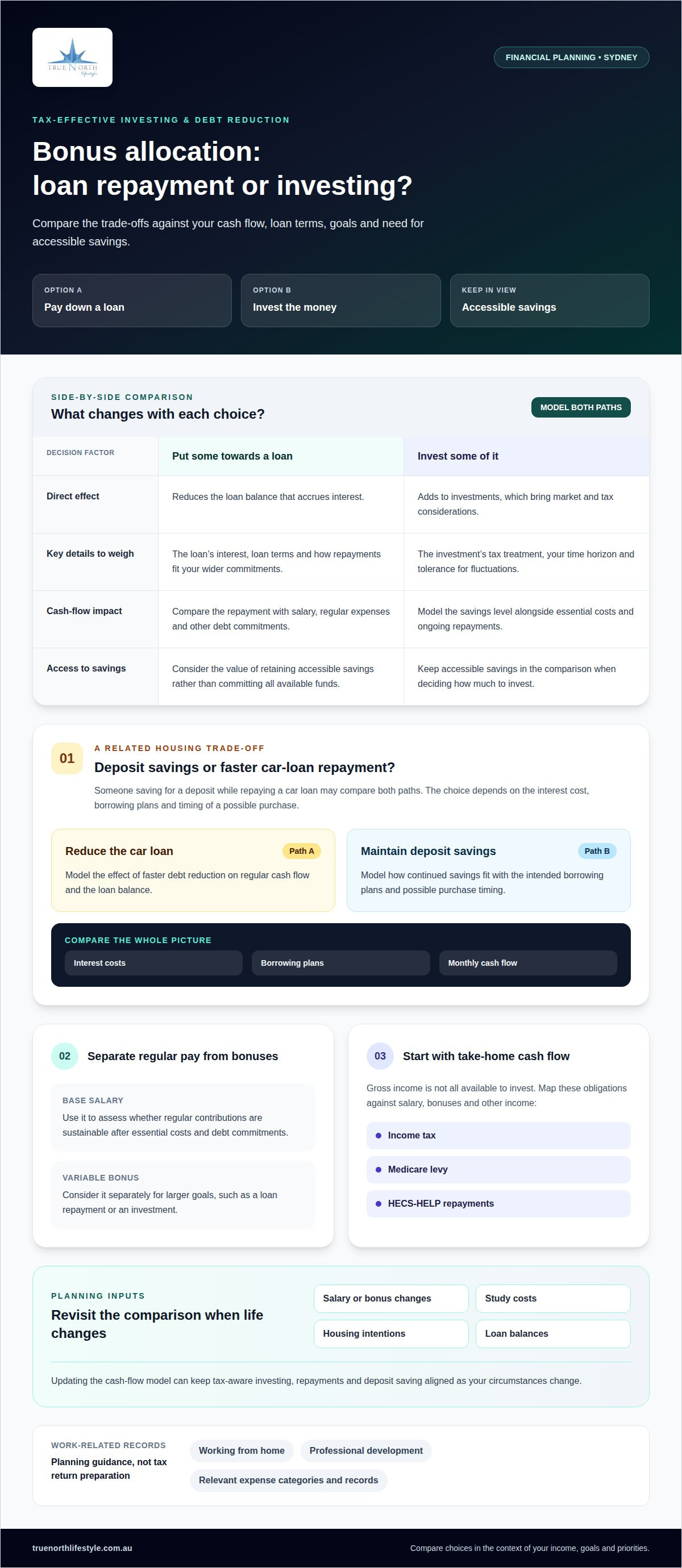
For data scientists, tax-effective investing means coordinating investment choices with income, repayments and future goals. A financial adviser can help identify relevant work-related expense categories and records, including those connected with working from home or professional development. This is planning guidance, not tax return preparation.
Planning for Tax and Repayments
Income tax, the Medicare levy and HECS-HELP repayments all affect the take-home income available for investing or reducing debt. A planner can map these obligations against salary, bonuses and other income, then model how different savings levels affect cash flow.
For example, a data scientist receiving a bonus could compare putting some of it towards a loan with investing it. The analysis should consider the loan’s interest, the investment’s tax treatment and the value of keeping accessible savings. These factors clarify the trade-offs without treating gross income as money entirely available to invest.
Balancing Housing Costs and Debt
Sydney housing costs can compete with a home deposit, mortgage repayments and other financial goals. A planner can model these commitments together, including rent or ownership costs, regular expenses, existing repayments and the savings needed to maintain a comfortable cash buffer.
For instance, someone saving for a deposit while repaying a car loan may weigh faster debt reduction against maintaining deposit savings. The choice depends on interest costs, borrowing plans and the timing of a possible purchase. Modelling both paths makes their effect on monthly cash flow easier to compare.
Investment decisions also need to account for debt. Paying down a loan reduces the balance that accrues interest, while investing introduces market and tax considerations. A planner can compare these options against your income stability, loan terms, time horizon and tolerance for fluctuations, rather than assuming one approach suits every data scientist.
Portfolio construction can reflect what you can invest after essential costs and debt commitments. For example, an employee with variable bonuses may benefit from treating base salary and bonus income separately. This can make regular contributions more sustainable while keeping occasional income available for larger goals.
Review the plan when salary, study costs, housing intentions or loan balances change. Updating the cash-flow model helps keep tax-aware investing, repayments and deposit saving aligned, instead of letting one decision quietly undermine another.
Estate, legacy and aged-care planning
A clear legacy plan connects your assets, personal wishes and family responsibilities. A financial planner can map property, investments, superannuation and other assets, then show how each fits your intended legacy. For example, a data scientist with a partner and children may want to account for both immediate family needs and long-term wealth transfer.
An estate planning strategy can help organise the financial decisions around those intentions. It may include reviewing beneficiary details, considering how assets are structured and identifying where legal documents need to reflect your wishes. A planner can clarify your financial position and coordinate it with your broader plans, without replacing legal advice or drafting legal documents.
Keep the plan current. Changes in relationships, dependants, property ownership or business interests can affect how well it fits. A practical review brings those changes into view, including whether your superannuation arrangements align with your wider intentions. Superannuation and other assets may require separate consideration in an estate plan.
Changing jobs, contracting or receiving bonuses can alter your income patterns and how you manage savings, superannuation and financial protection. A financial planner can model these transitions, consider cash-flow changes and review how your longer-term plans may need to adapt. For a contractor, that could mean planning around uneven income rather than relying on a steady salary.
Aged-care planning adds another layer. Financial questions can include how care expenses may affect savings, which assets might need to remain accessible and how income could support different care arrangements. A planner can model these choices alongside other goals, such as preserving assets for a partner or family members.
For example, someone approaching retirement may want to compare keeping an investment property with selling it to create more accessible funds. Relevant factors include expected income, ongoing property costs, access to savings and the legacy they want to leave. Reviewing the trade-offs early can bring estate and aged-care decisions into one considered plan.
Retirement planning and income strategies
Financial planning for data scientists in Sydney can model how salary sacrifice and superannuation contributions affect take-home income and retirement savings. A planner can also assess concessional contributions against the applicable cap, taking employer contributions and other amounts counted towards it into account.
Retirement projections connect your current super balance and savings pattern with your preferred retirement timing and income needs. For a data scientist, the model can account for changing salary, career breaks or contracting periods, then show how those choices may affect longer-term outcomes.
Managing Salary Sacrifice
Salary sacrifice directs an agreed portion of salary into superannuation before it reaches your bank account. A planner can compare that contribution with take-home pay, regular expenses, debt commitments and savings goals to assess its place in your cash-flow plan.
For example, someone expecting a bonus may model regular salary sacrifice separately from that one-off payment. This makes it easier to weigh retirement saving against near-term needs, such as maintaining accessible savings or preparing for a planned career change.
Planning Super Contributions and Caps
A planner can review employer contributions alongside salary-sacrifice or personal concessional contributions. This shows how existing contributions use the applicable concessional cap and whether a proposed change fits your broader financial plan.
For example, a data scientist with multiple employers may need a combined view of contributions, rather than assessing each role alone. Contribution records and expected employment changes can help model the effect of different contribution levels.
Projections also need an income strategy. A planner can estimate how superannuation and other assets may support planned spending, then test how different retirement dates or contribution patterns change the picture. This turns a broad goal into a set of connected assumptions.
Good financial planning for data scientists in Sydney accounts for changing income needs over time. A plan might distinguish essential costs from discretionary spending, then model how available assets could support each category. Someone hoping to travel early in retirement, for instance, can compare that spending with later-life priorities.
Regular reviews matter when your salary, employer contributions or retirement plans change. Updating the model helps keep contribution decisions aligned with cash flow and long-term income needs, rather than relying on assumptions from an earlier role.
How should data scientists plan for Sydney housing costs, a home deposit, and mortgage borrowing?
A financial planner can put a Sydney home goal alongside your regular costs, debts and longer-term priorities. The analysis starts with your income pattern, current commitments and intended purchase timing, then models how deposit saving and future repayments could affect your financial position.
For a data scientist receiving a steady salary, a planner can map monthly take-home income against rent, bills, existing loan repayments and planned savings. A contractor with uneven invoices needs a different cash-flow view, with quieter periods considered alongside stronger ones. These scenarios help set a deposit contribution that fits actual income patterns.
Deposit planning is about more than saving a target amount. A model can compare keeping funds accessible with investing surplus savings, while accounting for the purchase timeline and the possibility that investment values may change. It can also show how a larger deposit could affect the amount borrowed and the cash left for moving or urgent costs.
Borrowing scenarios should account for more than a possible mortgage repayment. A planner can model changes in interest costs, household expenses, income and other debts to show how much flexibility remains after purchase. For example, a data scientist considering a role change can compare a housing plan based on current salary with one that allows for a period of lower income.
Location choices can change the balance between housing costs and other goals. Comparing a longer commute with different property options brings transport costs, time and monthly cash flow into the same decision. A planner can also test whether deposit saving would slow retirement contributions or leave too little accessible cash.
Bring together your income details, debts, savings and intended timing so the analysis reflects your circumstances. A planner can model these inputs without arranging a mortgage or making borrowing decisions for you. To connect a home goal with your wider financial priorities, discuss your financial planning options.
True North Lifestyle
True North Lifestyle helps data scientists bring investment, tax and retirement decisions into one considered financial plan. If changing salary, bonus income or a home-buying goal makes priorities harder to balance, retirement modelling and long-term projections can show how different choices may affect your financial position.
Depending on your goals, planning may also include tax-minimisation strategies, a superannuation review and optimisation, or bespoke portfolio construction. These services connect today’s decisions with the longer-term outcomes you’re working towards, rather than treating each financial choice in isolation.
Contact True North Lifestyle to discuss your financial planning goals.
Choose your next financial priority
Your next step doesn’t need to solve every financial question at once. Identify the decision most likely to shape the coming years, such as changing roles, buying a home or adjusting your retirement timeline. A focused conversation can put that decision in context and clarify which assumptions deserve closer attention.
Financial planning for data scientists in Sydney offers a structured way to connect career choices with the life you want your finances to support. Bring your priorities and questions to a consultation, so the discussion can focus on what matters to you now and how it fits your longer-term direction.
Contact True North Lifestyle to discuss your financial planning goals. A considered next step can make complex decisions feel more manageable and help you move forward with greater clarity.
Frequently Asked Questions
What financial planning services are most relevant to data scientists in Sydney?
The right support depends on your priorities, whether that means building investments, reviewing super or planning a career transition. A data scientist with employer shares may need to consider how that exposure fits alongside other investments, while someone approaching retirement may focus on long-term projections. For people in Miranda and across Sydney, True North Lifestyle can connect these decisions in a tailored strategy.
How can a financial planner help Australian data scientists assess investment options and risks, including ETFs, shares, and employee equity?
A financial planner can compare how ETFs, individual shares and employee equity contribute to portfolio concentration, diversification and risk. For example, if your salary and equity both depend on one employer, that exposure may shape how other investments fit your goals. The assessment can also consider access to funds, investment timeframe and your response to market fluctuations before developing a suitable portfolio approach.


